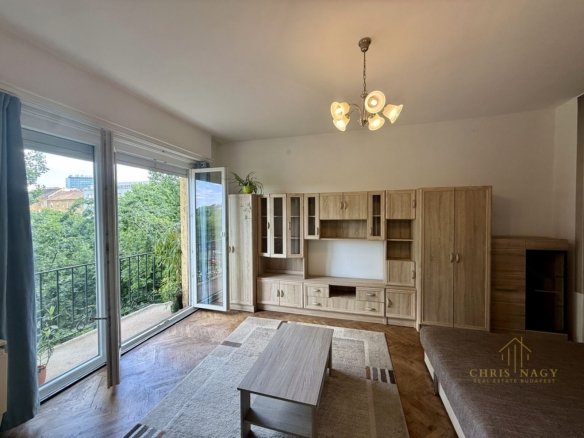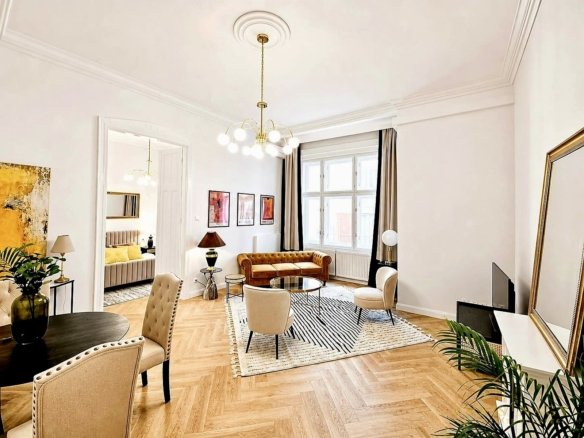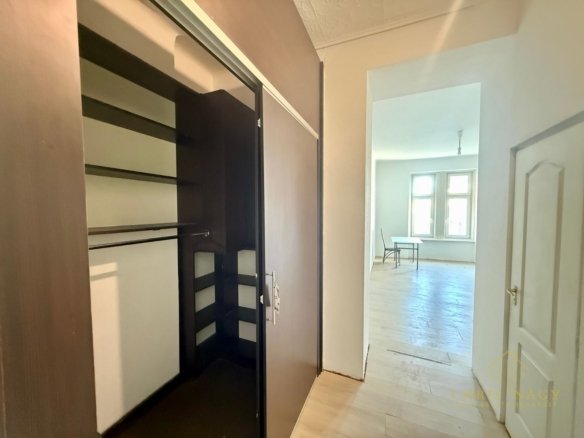
Budapest is one of Europe’s most visually striking and structurally diverse capitals — a city defined by the Danube, by the contrast between Buda and Pest, and by 23 districts that each offer a very different version of urban life. Some parts of the city are dense, elegant, and historic; some are green, villa-like, and residential; others feel more local, suburban, family-oriented, or investment-driven. This variety is exactly what makes Budapest such a compelling real estate city.
For buyers, investors, and international clients, Budapest is not one single market. It is a collection of highly distinct micro-locations, each shaped by its own architecture, atmosphere, transport profile, housing stock, and lifestyle logic. That is why understanding the districts matters so much: the difference between District 5 and District 8, between District 12 and District 22, or between District 13 and District 17 is not small — it is fundamental.
Broadly speaking, Budapest can be understood through three major groups: Inner Budapest Districts, where historic core, urban energy, walkability, and strong rental demand dominate; Buda Side Districts, where hillside living, greenery, prestige, and family-house or villa environments become stronger; and Outer Budapest Districts, where local identity, larger residential scale, more space, and a calmer long-term living rhythm come into focus.
Inner Budapest Districts
5th District
6th District
7th District
8th District
9th District
13th District
14th District
Buda Side Districts
1st District
2nd District
3rd District
11th District
12th District
22nd District
Outer Budapest Districts
4th District
10th District
15th District
16th District
17th District
18th District
19th District
20th District
21st District
23rd District
Read more
What defines Budapest as a real estate city?
Budapest is defined by contrast. On one side, it is a grand historic capital with Parliament, Andrássy Avenue, the Buda Castle area, the Danube promenade, thermal baths, bridges, and some of the most recognizable urban scenery in Central Europe. On the other, it is a city of very different residential worlds: elegant inner districts, transitional investment zones, villa hillsides, socialist-era housing estates, Danube-edge neighborhoods, old suburban settlements, and quieter family-house districts that feel far removed from the tourist core.
This contrast is not a weakness — it is one of Budapest’s greatest strengths. The city works for many different buyer profiles at once. Someone looking for prestige and walkability will think completely differently from someone prioritizing greenery, family life, accessibility, rental yield, architectural atmosphere, or value-for-money entry points.
Inner Budapest Districts
District 5 is the most symbolic core of Pest: formal, prestigious, institutional, and highly central. It is the district of Parliament-facing prestige, riverfront importance, and classical inner-city Budapest at its most established.
District 6 is one of the city’s most elegant urban districts, anchored by Andrássy Avenue, the Opera area, and a strong late-19th-century architectural identity. It combines prestige, culture, and city-center functionality in a very balanced way.
District 7 is denser, more energetic, and more nightlife-linked, but also one of the most central and historically layered parts of Pest. It carries strong urban intensity and has long been one of the best-known inner-city districts for both locals and visitors.
District 8 is one of the most complex and most important transformation districts in Budapest. It includes some of the city’s most beautiful historic quarters, major university and medical areas, regeneration zones, and more mixed residential environments. It is central, varied, and extremely important in real estate terms because micro-location matters so much here.
District 9 combines older Ferencváros identity with strong regeneration, modern riverfront development, university presence, and some of the city’s most visible urban change. It is one of the strongest examples of how Budapest’s inner districts continue to evolve.
District 13 is one of the most functionally important and residentially relevant districts of Budapest. It includes Újlipótváros, Angyalföld, and Vízafogó, giving it a rare combination of elegant inner-city living, major office and residential growth, and strong Danube-side appeal.
District 14 is central in accessibility but greener and more residential in atmosphere. With Városliget as a defining asset and neighborhoods like Istvánmező and Herminamező around it, Zugló offers one of the most balanced Pest-side living environments in the city.
As a group, the inner districts are ideal for buyers seeking walkability, historic architecture, strong urban infrastructure, central prestige, and long-term liquidity. They are especially relevant for city lovers, international buyers, and those who want Budapest in its most immediate and iconic form.
Buda Side Districts
District 1 is where historic Buda begins in its most iconic form: Castle District prestige, Danube-facing significance, old-town texture, and elegant residential pockets around Víziváros (I.), Krisztinaváros (I.), and Tabán.
District 2 is one of Budapest’s classic prestige residential districts, strongly associated with villas, greenery, diplomatic presence, and some of the most sought-after family-house and apartment micro-locations on the Buda side.
District 3 is broader and more mixed. It includes historic Óbuda character, Danube-edge living, panel and apartment zones, hillside family-house areas, and very different residential worlds inside one large district.
District 11 is one of the biggest and most complete districts in the city, combining Újbuda center functions, university life, major transport links, Buda-side residential strength, and greener outer sections. It is one of Budapest’s most broadly relevant districts in practical real estate terms.
District 12 is one of the strongest prestige addresses in Budapest. It is associated with the Normafa area, hillside villas, calm streets, and some of the city’s most desirable green residential environments.
District 22 is the southern Buda edge, where Budafok, Budatétény, and Nagytétény create a lower-density, family-house, wine-history, and Danube-adjacent district atmosphere with more space and a distinctly different rhythm from inner Buda.
As a group, the Buda side districts are ideal for buyers seeking prestige, greenery, larger homes, quieter surroundings, hillside or villa environments, and stronger long-term residential comfort. They are especially attractive for families, executives, return buyers, and clients who prioritize atmosphere and livability over central-city intensity.
Outer Budapest Districts
District 4 combines Újpest’s historical core with major residential areas like Káposztásmegyer and several smaller official neighborhoods. It is one of the classic northern outer-Pest districts with strong practical housing relevance.
District 10 is one of the most mixed and structurally complex outer districts, shaped by Kőbánya’s industrial history, housing estates, greener sections, and several smaller or non-conventional neighborhoods. It is a district where exact micro-location matters enormously.
District 15 is built from Rákospalota, Pestújhely, and Újpalota — combining old settlement identity, quieter villa-like streets, and large-scale apartment living inside one district.
District 16 is one of outer Pest’s strongest family-house districts, defined by settlements like Cinkota, Mátyásföld, Sashalom, and Rákosszentmihály. It offers greenery, local identity, and lower-density living at a high level.
District 17 is one of Budapest’s biggest and greenest outer districts, made up of historically separate neighborhoods like Rákoskeresztúr, Rákosliget, Rákoshegy, and Rákoscsaba. It feels strongly settlement-based and family-house oriented.
District 18 is one of the city’s most varied outer districts, stretching from garden-suburb and family-house areas to major housing estates and airport-adjacent zones. It is much more layered than many people first assume.
District 19 is special because it contains just two official neighborhoods, but those two — Kispest and Wekerletelep — create one of the clearest contrast pairs in Budapest: practical urban district center versus one of the city’s most beloved and architecturally distinctive garden-city environments.
District 20 feels more fragmented, older-suburban, and local in identity, with named teleps and southern-Pest texture giving it stronger internal character than its modest profile might suggest.
District 21 is Csepel, and Csepel is its own world: island geography, industrial history, district-center life, greener outer areas, and a very strong identity that separates it from most other outer districts.
District 23 is Soroksár, Budapest’s southernmost district, where former independent-town atmosphere, quieter streets, and stronger local continuity still shape the whole district in a very direct way.
As a group, the outer districts are ideal for buyers seeking more space, calmer streets, family-house living, local identity, broader residential choice, and better value-per-square-meter than the central core typically offers. They are especially relevant for long-term living, families, practical owner-occupiers, and buyers whose priorities are driven more by lifestyle fit than prestige alone.
Budapest lifestyle, atmosphere, and city logic
What makes Budapest especially compelling is that the city never feels one-dimensional. Even within the same side of the city, districts can change dramatically in tone. One area may feel monumental and urban, the next leafy and residential, the next transitional and investment-led, and the next almost small-town in rhythm. This gives buyers a rare opportunity: to choose not just a property, but a version of Budapest that actually fits them.
Some clients fall in love with the elegance of District 5, 6, or 1. Some want the transformation energy of District 8 or 9. Some want the practical completeness of District 13 or 11. Some want the villa prestige of District 2 or 12. Others want the garden-suburb calm of District 16, 17, 18, or 23. And some want a highly specific local atmosphere that exists almost nowhere else — like Wekerletelep, Csepel-Ófalu, Királyerdő, or Soroksár’s old-town side.
Real estate perspective
From a real estate point of view, Budapest is attractive because it offers real variety without losing overall city coherence. The city has prestige locations, stable owner-occupier districts, investment-oriented inner zones, transport-driven practical areas, family-house belts, and character neighborhoods that can appeal emotionally in a way spreadsheets never fully explain.
This is why district-level understanding matters so much. In Budapest, the difference between two nearby areas can be enormous in pricing logic, buyer profile, housing stock, and future desirability. A strong Budapest overview must therefore do two things at once: show the big picture, and respect the fact that micro-location is everything.
The city works best when presented honestly. Budapest is not only about the postcard core. Its real strength lies in the full range — from Parliament-facing prestige to quiet family-house streets, from historic villa quarters to worker-settlement heritage, from Danube-edge neighborhoods to garden suburbs and outer districts with real local soul.
Short-term rental perspective: for buyers specifically interested in the short-term rental logic of Budapest, the strongest historic inner-Pest focus has typically been District 7, District 8, and District 9. These districts sit closest to the combination of walkability, nightlife, restaurant density, landmarks, universities, and strong visitor demand that has long defined the city’s most active short-stay geography.
District 7 has historically been one of the clearest short-term rental zones because of its central position, nightlife profile, and immediate connection to the historic core. District 8 is more mixed and much more micro-location-sensitive, but its stronger central sections — especially the better-positioned inner neighborhoods — have long been highly relevant in short-stay and investor thinking. District 9 adds a different version of this logic through regeneration areas, riverside development, university presence, and a more modern urban residential profile.
At the same time, this part of the market now has to be understood with much greater regulatory caution than before. In practical terms, these districts remain some of the most important parts of Budapest for buyers thinking about tourism-driven demand, visitor appeal, and flexible central-city use — but short-term rental strategy should always be evaluated against the current legal and district-level regulatory environment.
Who is Budapest ideal for?
Budapest is ideal for buyers seeking architectural beauty, strong district variety, livable urban structure, and a city where very different lifestyle priorities can all be satisfied inside one capital. It works for investors, first-time buyers, upsizers, families, international clients, and long-term owner-occupiers — but only when the district choice matches the real goal.
Bottom line
Budapest is not just one city — it is a collection of 23 very different residential worlds held together by one extraordinary urban identity. Inner Budapest Districts offer prestige, energy, and historic city life. Buda Side Districts offer greenery, hillsides, and residential refinement. Outer Budapest Districts offer space, local identity, and broader long-term living options. Taken together, they make Budapest one of the most layered, most livable, and most compelling real estate cities in Central Europe.